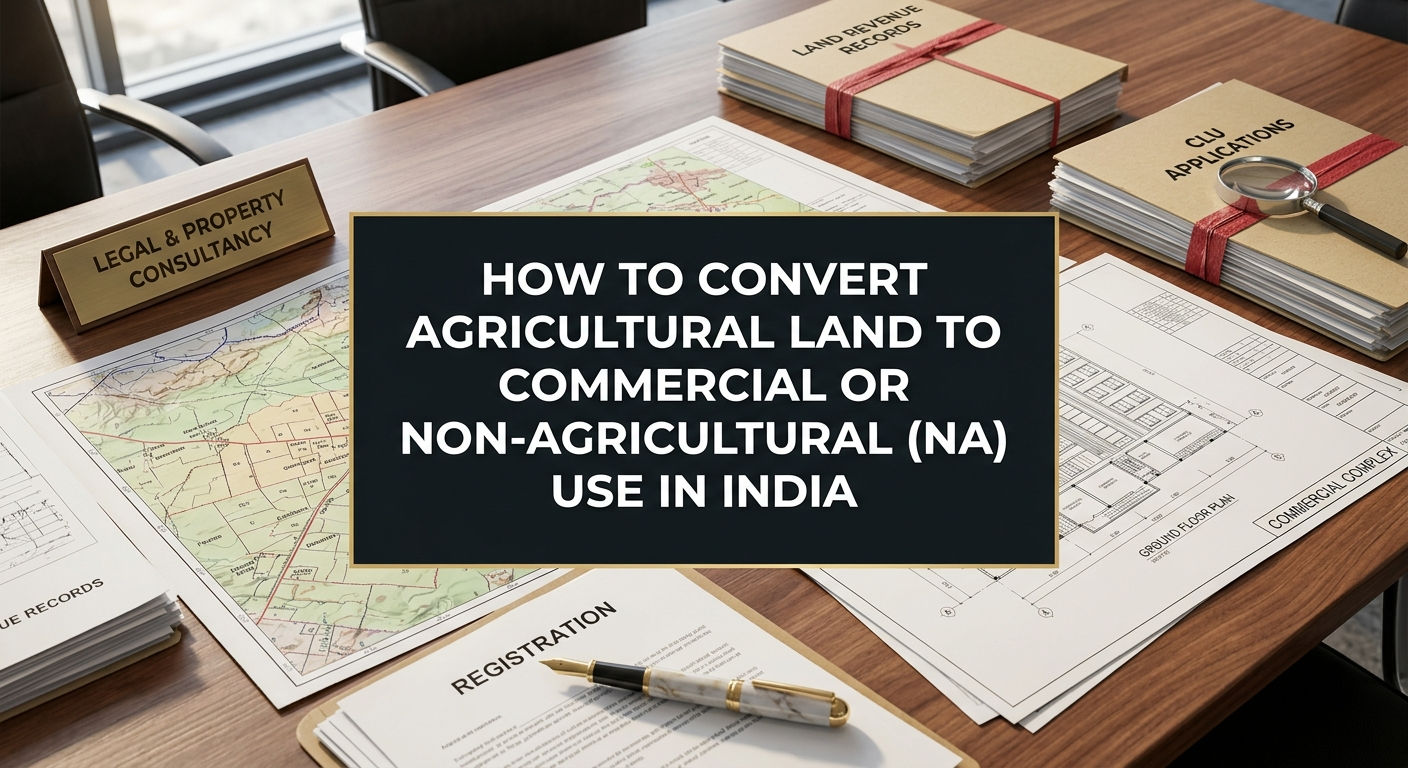
Buying agricultural land may look like a good investment, especially if you plan to build a home, open a business, or develop a property for sale. However, there is one important detail that buyers sometimes overlook: agricultural land cannot always be used for commercial or residential purposes without permission.
For example, a piece of farmland may look ideal for a warehouse or a row of shops because it sits beside a busy road. But road access alone does not make commercial development legal.
This is where land conversion becomes important. Depending on the state, you may need non-agricultural (NA) permission, Change of Land Use (CLU) approval, or other permissions before changing how the property is used.
If you are planning to buy NA land or convert agricultural land for a new project, here is what you should know before spending your money.
What Is NA Land?
NA land is land approved for a non-agricultural purpose under the applicable state rules. This may include residential, commercial or industrial use, depending on the permission granted.
The term is commonly used in Maharashtra, although the terminology and legal process differ across India.
It is also important to understand that an NA order does not automatically permit every type of construction. A plot approved for residential use, for instance, may not be suitable for a shopping complex or factory. Additional building or layout approvals may also be required.
Therefore, before purchasing a plot, ask for the official conversion order and check exactly what it permits.
Why Do You Need to Convert Agricultural Land?
The main reason is simple: the proposed use of the land must comply with the applicable laws and planning rules.
A landowner may want to build a house, develop residential plots, open a showroom, or establish a small industrial unit. Each activity can have different requirements.
Completing the necessary land conversion process helps you understand whether your plan is legally permitted. It can also reduce the risk of penalties, construction delays and disputes when you eventually sell or develop the property.
More importantly, it helps you calculate the actual investment required. The purchase price may seem attractive, but conversion fees, professional charges and other approvals can add to the total cost.
How to Convert Agricultural Land to Commercial or NA Use in India
There is no single procedure that applies to every state. However, most applications involve the following checks and steps.
1. Check Ownership and Land Records
Start with the legal documents. Check the registered sale deed, revenue records, survey details and other ownership papers relevant to the property.
Depending on the state, these records may include Khasra, Khatauni, Jamabandi or a Record of Rights.
Also check whether the land has an existing mortgage, ownership dispute, acquisition notice or restriction on transfer. If the seller's documents do not match the actual land details, resolve the issue before moving ahead.
2. Check Zoning Laws and the Master Plan
Next, find out whether the proposed use is permitted in that location.
Local development plans may identify areas for agricultural, residential, commercial, industrial or other uses. Even when a property is close to a developed neighbourhood, its current zoning may restrict the project you have in mind.
Contact the relevant planning authority or revenue department. Ask whether the proposed activity is allowed and whether a separate CLU permission is required.
This check is particularly important for agricultural to commercial land conversion because commercial development may involve additional planning and infrastructure requirements.
3. Identify the Correct Government Authority
The approving authority depends on the state, the property's location and the type of development.
In some cases, an application may be handled by a District Collector or Deputy Commissioner. In others, a revenue department, development authority or town-planning body may be involved.
Do not assume that one approval covers every requirement. Revenue conversion and planning permission can be separate processes.
4. Collect the Required Documents
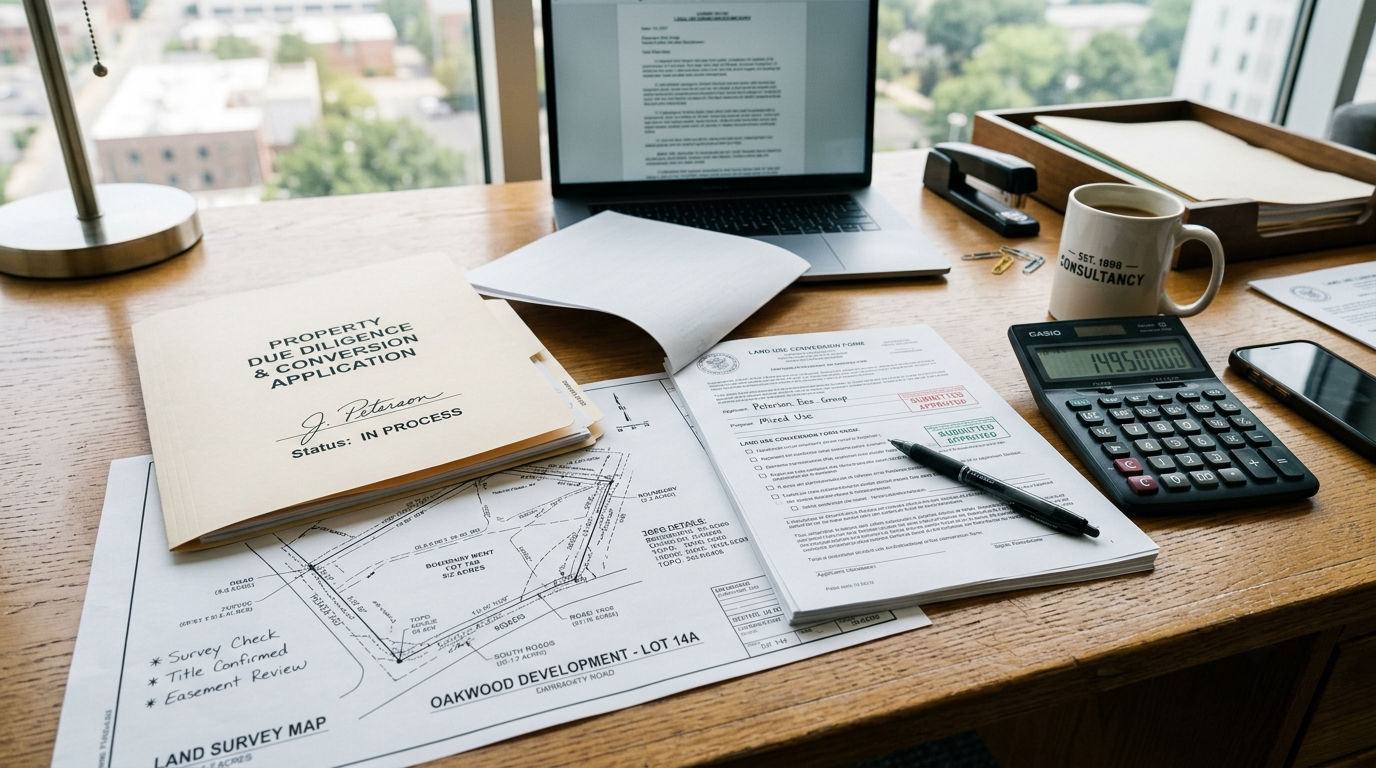
The documents required for an NA land order vary, but applicants are commonly asked for ownership papers, current revenue records, survey maps, a site plan, identity proof and a completed application form.
The authority may also request an encumbrance certificate, details of the proposed use, fee receipts or additional no-objection certificates.
Check the official document list before applying. This can save time and reduce the chances of your application being returned for missing information.
5. Submit the Application and Pay the Fees
Submit the prescribed application through the relevant government portal or office. Clearly mention whether you want residential, commercial or industrial use.
You may need to pay land conversion charges, application fees or other amounts specified under the applicable rules.
Keep the acknowledgement and payment receipts. They will be useful if you need to follow up on the application.
6. Wait for Verification and Obtain Approval
The authority may check the land records, inspect the site or consult another department. It may also ask you to provide additional documents.
Once approval is granted, read the conversion order carefully. Check the survey numbers, approved area, permitted use and any conditions attached to it.
Finally, confirm whether you need a separate layout plan, building approval or other clearances before starting construction.
What Are the Land Conversion Charges in India?
One of the most common questions buyers ask is, "How much will it cost to convert agricultural land?"
Unfortunately, there is no single rate for the whole country. Land conversion charges depend on the applicable state rules and may vary according to location, land area, proposed use and notified valuation.
Your total expense may include:
Government conversion fees or taxes.
Application and scrutiny charges.
Survey and documentation expenses.
Legal or professional fees, where required.
Layout, building or other development approval fees.
For example, consider a hypothetical buyer who purchases farmland intending to develop a small commercial property. The buyer budgets only for the purchase price and conversion fee. Later, the project requires a survey, professional drawings and additional planning approvals. These costs increase the overall budget, even though the original land price has not changed.
That is why it is better to calculate the total project cost before making a commitment.
For an accurate estimate, ask the relevant authority for the current fee schedule and confirm which additional approvals apply to your property.
CLU Permission Process: Is It Different from NA Conversion?
CLU stands for Change of Land Use. It generally relates to changing the designated use of land under an applicable planning framework.
NA conversion and CLU permission may be connected, but they are not always the same thing. A revenue authority may deal with conversion from agricultural to non-agricultural use, while a planning authority may assess whether the proposed development fits the approved land-use plan.
In some cases, you may need both approvals.
Before applying, confirm the requirements with the authority responsible for your location. Always verify the current procedure before relying on any online guidance.
How to Convert Farmland to a Residential Plot
If your goal is to convert farmland to a residential plot, first check whether residential use is allowed under the relevant planning rules.
Next, confirm whether you intend to build one house or divide the land into several plots. These are not necessarily treated in the same way.
A larger plotted development may require an approved layout, road access, infrastructure provisions and other permissions. An agricultural land conversion order alone may not be enough.
Once the necessary approvals are in place, keep copies of the documents and check that the permitted use matches your actual plan.
Buying an NA Plot? Check These Details First
A seller may describe a property as an approved NA plot, but it is always worth checking the paperwork yourself.
Before finalising the purchase, verify the official conversion order, ownership documents, survey details and approved land use. If the plot belongs to a larger development, ask for the approved layout plan as well.
Also check for mortgages, legal disputes, acquisition notices and restrictions on construction.
A little document checking at this stage can prevent expensive surprises later. If the investment is substantial, have a qualified property lawyer review the records before you sign the final agreement.
You can also read our guide to property due diligence before buying land to understand the other checks worth completing before a purchase. (Add your relevant internal link here.)
What Happens If You Use Agricultural Land for Commercial Purposes Without Permission?
Using agricultural land for an unauthorised commercial activity can lead to legal and financial problems.
Depending on the applicable state law, the authority may issue a notice, impose a penalty, restrict further development or direct the owner to stop the unauthorised activity. In certain cases, restoration of the permitted use may also be required.
Do not assume that paying a penalty will automatically legalise the property. Regularisation may not be available in every case and, where permitted, may involve a separate process.
The safer option is to verify the rules and obtain the necessary approvals before starting commercial operations or construction.
Final Thoughts
Converting agricultural land into commercial or non-agricultural property can open up new investment opportunities. However, the right approach starts with checking the property's legal status, permitted use and development requirements.
Before you buy or apply, understand the CLU permission process, prepare the required documents and calculate the likely land conversion charges. Most importantly, obtain the necessary approvals before beginning work.
Whether you are buying NA land for a home or planning a commercial project, informed decisions are usually less expensive than fixing legal problems later.
Disclaimer: This article is for general information only and is not legal advice. Land conversion procedures, fees and restrictions vary by state and may change. Verify the current rules with the competent authority and seek professional advice for your specific property.
Frequently Asked Questions
1. How do I apply for land conversion in India?
Check the land records and permitted use, identify the competent authority, submit the prescribed application and documents, pay the applicable fees, and obtain the required approval.
2. What documents are required for an NA land order?
Common requirements include ownership documents, revenue records, survey maps, a site plan, identity proof and the application form. Additional documents may be required under local rules.
3. How much does it cost to convert agricultural land to residential use?
The cost depends on the state, property location, land area, applicable fee structure and additional approvals. Check the current government schedule for an accurate estimate.
4. Can agricultural land be used for commercial purposes without conversion?
Where conversion or other prior permission is required, using the land commercially without approval may violate the applicable rules. Verify the legal requirements before starting operations.
5. Is NA permission enough to construct a building?
Not always. A building-plan sanction, layout approval or other clearances may also be required, depending on the location and project.
6. How long does land conversion take?
The processing time varies by authority, application type, document completeness and additional verification requirements. Check the official service timeline for your location.
7. Can I convert agricultural land into multiple residential plots?
Possibly, if the land is eligible and all required conversion, layout and planning permissions are obtained. Approval for one residential use does not automatically authorise a plotted development.
8. Are land conversion charges the same in every state?
No. Rates and calculation methods vary by state and may depend on the land's area, location, valuation and proposed use.
9. What is the difference between NA permission and CLU approval?
NA permission generally relates to non-agricultural use under the applicable revenue rules. CLU relates to a change in designated land use under the relevant planning framework. The requirements may overlap, so confirm which approvals apply.
10. How can I check whether an NA plot is legally approved?
Obtain the official conversion order and verify it with the relevant authority. Check the approved purpose, ownership records, survey details and any layout or building approvals required for your project.