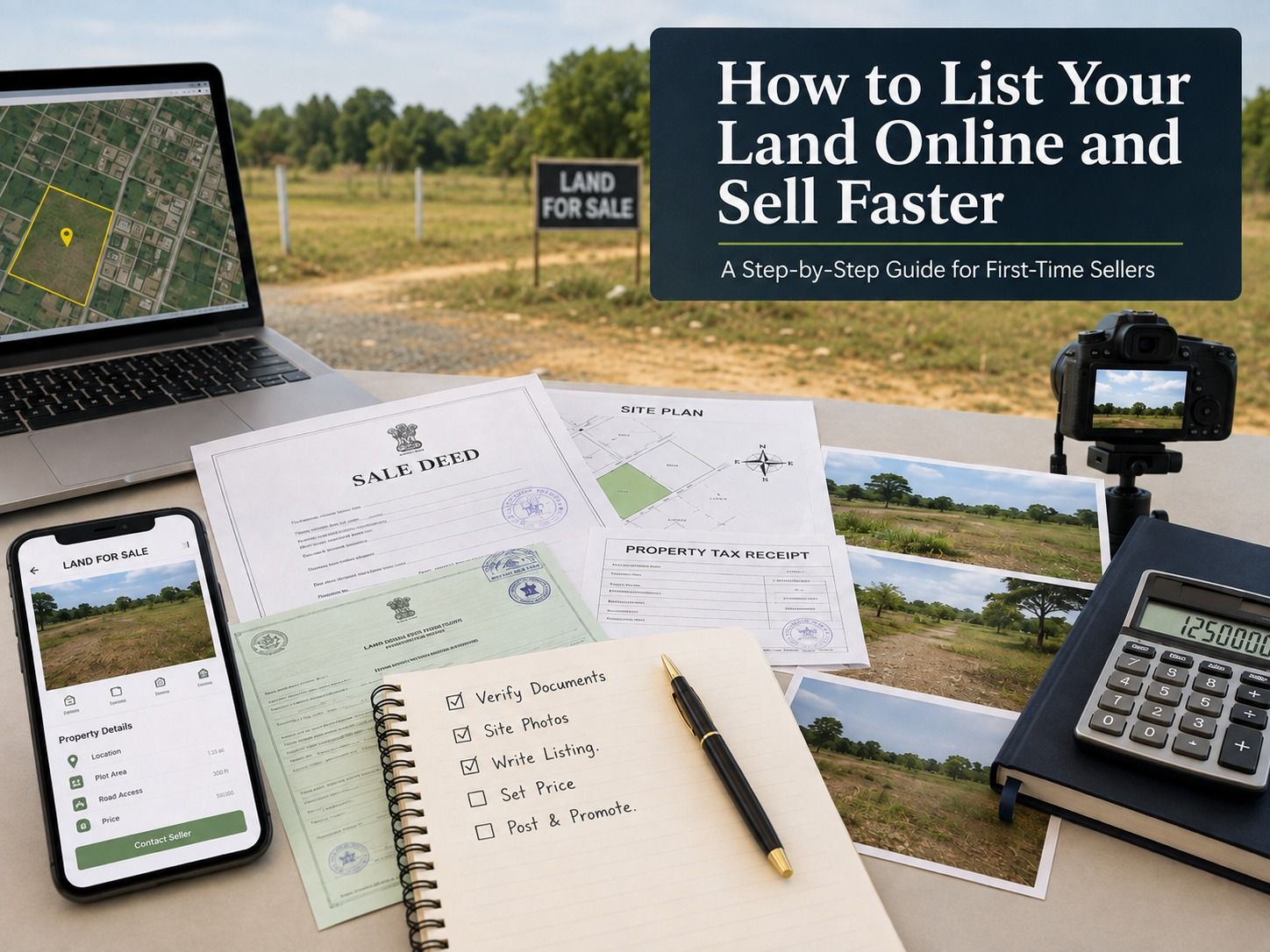
How to List Your Land Online and Sell Faster: A Step-by-Step Guide for First-Time Sellers
Selling land used to be a slow process.
You would put up a "For Sale" board, tell a few local property dealers, and then wait. Sometimes for weeks. Sometimes for months.
Things have changed.
Today, most buyers begin their property search online. Before they make a phone call, they compare prices, look at photos, check the location on a map, and read the property description. In many cases, they've already shortlisted a few options before they even step out to visit a site.
That's why your online listing matters more than ever.
A well-presented listing doesn't just attract more views—it attracts the right buyers.
If you're selling land for the first time, the process may seem overwhelming. What details should you include? How should you price the property? Which photos should you upload? And where should you list it?
The good news is that you don't need to be a real estate expert to create an effective listing.
With a little preparation and the right approach, you can present your property professionally and improve your chances of selling faster.
Let's go through it step by step.
Why Online Property Listings Matter in 2026
Think about the last time you wanted to buy something valuable.
Maybe it was a car.
Maybe a smartphone.
Chances are, you searched online before visiting a showroom.
Property buyers behave in much the same way.
Whether someone is looking for a residential plot, agricultural land, or commercial property, the first stop is usually an online property portal or a Google search.
That means your listing often creates the first impression.
And first impressions matter.
A listing with clear information, good photographs, and transparent pricing naturally builds more confidence than one with a single blurry photo and the description, "Call for details."
Buyers Are Looking for Information, Not Sales Pitches
One mistake many first-time sellers make is trying to make their property sound "perfect."
Experienced buyers can usually tell the difference between useful information and marketing language.
Instead of writing:
"Best investment opportunity! Guaranteed returns!"
Tell buyers something they actually want to know.
For example:
Distance from the nearest highway.
Road width.
Nearby schools or hospitals.
Availability of electricity and water.
Whether the land has clear ownership documents.
The surrounding development.
Specific details create trust.
And trust encourages enquiries.
Before You Create a Listing, Prepare Your Property
Good listings start before you upload anything online.
Spend some time preparing the property itself.
Visit the site.
Walk around.
Look at it from a buyer's perspective.
Is the entrance easy to identify?
Has the grass grown too high?
Are there piles of construction debris nearby?
Small improvements won't change the size of your land.
But they can improve how buyers perceive it.
A Small Observation That Many Sellers Overlook
Imagine two similar plots.
The first has overgrown bushes, broken fencing, and scattered rubbish.
The second has been cleaned, the boundaries are visible, and the entrance is easy to access.
Both may have the same market value.
Yet most buyers will naturally feel more positive about the second one.
Sometimes, presentation influences interest long before negotiations begin.
Step 1: Gather All the Important Information
Before creating your listing, collect the details buyers are most likely to ask about.
This saves time later and helps you answer enquiries confidently.
Prepare information such as:
Property type (Agricultural, Residential, Commercial)
Total area
Plot dimensions
Survey or Khasra number (where appropriate)
Ownership status
Road access
Nearby landmarks
Availability of water and electricity
Asking price
Contact details
Having these details ready makes creating the listing much easier.
Step 2: Verify Your Documents First
Many sellers focus on attracting buyers.
Experienced sellers focus on building confidence.
Before listing the property, organise documents such as:
Sale Deed
Ownership records
Mutation records
Property tax receipts
Encumbrance Certificate (if applicable)
Identity proof
Site plan
When serious buyers ask questions, being able to provide accurate information quickly creates credibility.
It also helps reduce delays during negotiations.
Step 3: Take High-Quality Photos
You don't need an expensive camera.
Most modern smartphones are more than capable.
The difference comes from how you take the photographs.
Visit the property during daylight.
Capture:
Front view.
Road access.
Boundary.
Surrounding area.
Nearby roads.
Important landmarks.
Any development nearby.
Avoid heavy editing.
Buyers want to see the actual property.
Not filters.
One Simple Trick That Makes a Big Difference
If you've ever looked at online property listings, you've probably noticed something.
Many photos are taken from inside a parked car.
Some are blurry.
Others point at the sky instead of the land.
A buyer scrolling through dozens of listings usually skips these in seconds.
Clear photographs taken while standing inside the property help buyers understand the space much better.
It sounds simple.
But it works.
Step 4: Write a Property Description That Answers Questions
A good property description doesn't need complicated words.
It simply needs useful information.
Instead of writing:
"Excellent property. Prime location. Best deal."
Try something like this:
Residential plot measuring 2,000 sq. ft. located approximately 500 metres from the main road. The property has clear road access and is close to schools, local markets, and healthcare facilities. Water and electricity connections are available nearby. Suitable for home construction or long-term investment.
Notice the difference?
The second description helps buyers imagine the property.
That's far more effective than repeating words like "premium" or "luxury."
Step 5: Price the Property Realistically
Pricing is one of the biggest reasons properties stay unsold.
Some sellers set the price too high because a neighbour mentioned a certain figure.
Others underprice their land hoping for a quick sale.
Neither approach is ideal.
Instead, compare:
Recent sales nearby.
Similar listings.
Infrastructure development.
Plot size.
Road connectivity.
Demand in the locality.
If you're unsure, consider consulting a local property expert or obtaining an independent property valuation.
A realistic asking price attracts more genuine enquiries.
A Seller's Experience Worth Sharing
A seller listed two adjoining plots online.
The first was priced significantly above the local market because they believed buyers would negotiate.
The second was priced close to comparable properties in the area.
Guess which one received enquiries first?
The realistically priced plot.
Interestingly, the higher-priced listing stayed online for months without much interest.
Sometimes, a fair price creates more opportunities than an ambitious one.
Why Honesty Helps You Sell Faster
It can be tempting to leave out small details.
Maybe the road isn't fully developed yet.
Maybe electricity is available only nearby.
Mention it.
Buyers appreciate honesty.
If someone visits expecting one thing and finds another, they're less likely to proceed.
Clear communication saves everyone's time.
And it builds trust from the very beginning.
A Small Market Insight
In many developing cities and emerging investment corridors, buyers increasingly compare multiple online listings before scheduling a site visit. Properties with complete information, clear photographs, and transparent pricing often receive more serious enquiries than listings that provide only basic details.
Step 6: Choose the Right Platform to List Your Land
Creating a great listing is only half the job.
The next step is making sure the right buyers actually see it.
Today, buyers search across multiple platforms before making a decision. Some prefer large property portals, while others discover listings through Google Search, social media, or local real estate websites.
Instead of relying on a single platform, consider listing your property in more than one place. This increases visibility and improves the chances of receiving genuine enquiries.
A combination of your own website, reputable property portals, and local real estate networks often works better than depending on just one source.
The more visible your property is, the better your chances of finding the right buyer.
Free Listing vs Paid Listing: Which One Should You Choose?
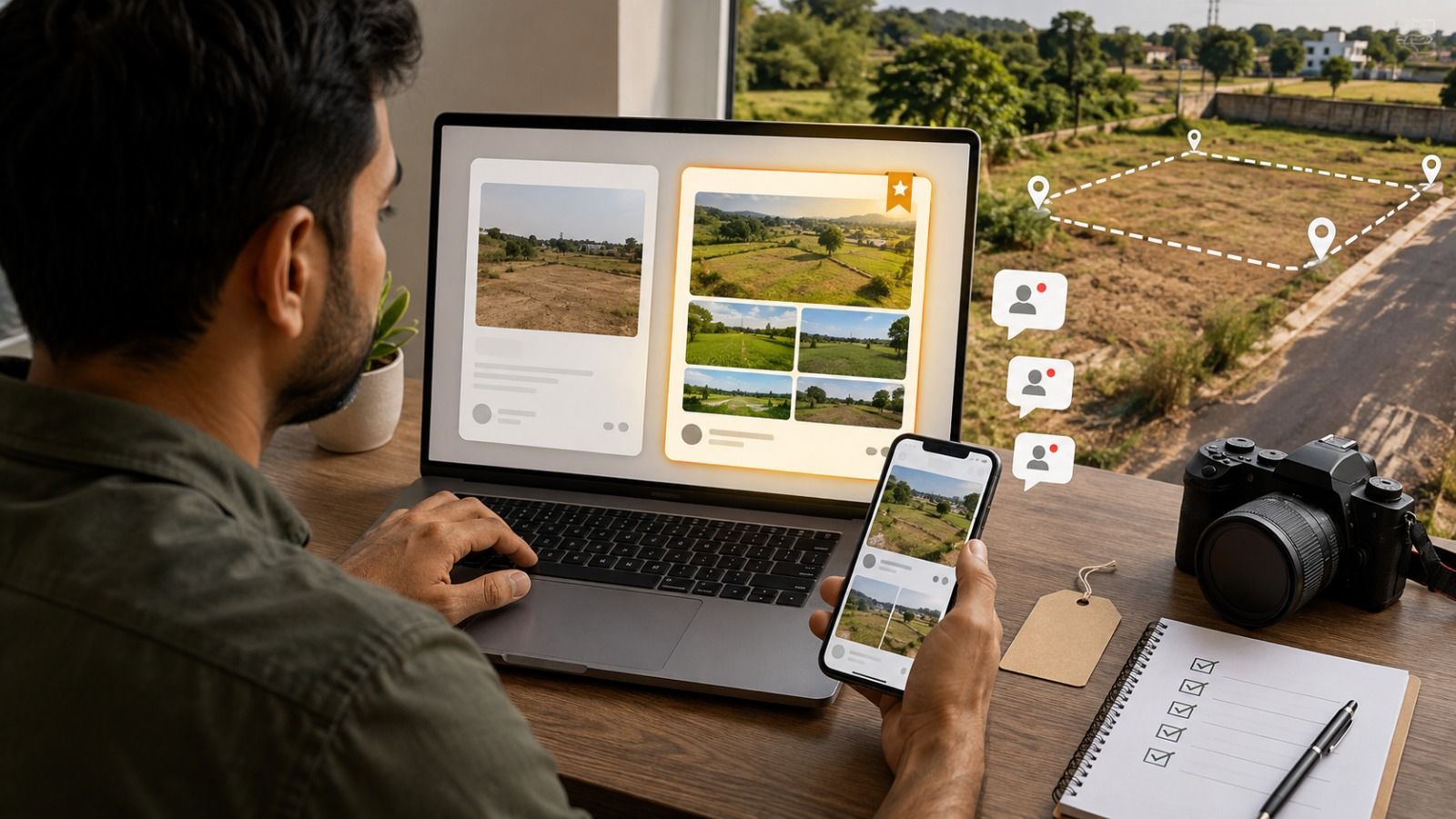
Many first-time sMany first-time sellers wonder whether paying for a premium listing is worth it.
The answer depends on your goals.
If you're not in a hurry, a free listing can be a good starting point.
However, if you're selling property in a competitive market where hundreds of similar listings already exist, a featured or premium listing may improve visibility.
Before paying for any promotion, ask yourself:
Is the property priced correctly?
Are the photographs professional?
Is the description complete?
Are buyers already viewing similar properties in this area?
Sometimes, improving the quality of the listing produces better results than paying for extra visibility.
Step 7: Respond to Buyer Enquiries Professionally
Receiving enquiries is exciting.
But responding well is just as important.
Many genuine buyers move on because they don't receive timely responses.
When someone contacts you:
Reply as soon as possible.
Share accurate information.
Be polite and transparent.
Avoid exaggerating the property's features.
Offer to schedule a site visit at a convenient time.
A prompt and professional response creates confidence from the very beginning.
Site Visits Matter More Than You Think
No matter how good your online listing is, most buyers will eventually want to visit the property.
Before they arrive:
Ensure the property is clean.
Make the boundaries visible.
Keep relevant documents ready.
Reach the site a little early.
Allow buyers enough time to inspect the property without pressure.
People often make decisions based on how comfortable they feel during a visit.
A relaxed conversation usually works better than a sales pitch.
A Small Observation That Experienced Sellers Know
Have you ever visited a property where the owner kept repeating, "You need to decide today"?
It often has the opposite effect.
Buyers appreciate information.
They don't usually appreciate pressure.
Giving people time to think often builds more trust than trying to create urgency.
Step 8: Be Prepared to Negotiate
Negotiation is part of almost every property transaction.
That doesn't mean you have to accept every offer.
Before you begin discussions, decide:
Your ideal selling price.
The minimum amount you're willing to accept.
Which terms are negotiable.
Which terms are not.
Knowing your limits helps you negotiate with confidence.
It also prevents emotional decisions.
Common Mistakes That Slow Down Land Sales
Interestingly, many properties remain unsold for reasons that have little to do with the market.
Here are a few common mistakes.
1. Unrealistic Pricing
Overpricing often discourages serious buyers before they even make contact.
Research comparable properties before setting your asking price.
2. Poor Photographs
Dark, blurry, or incomplete photographs reduce interest immediately.
Your photographs are often the first thing buyers notice.
3. Incomplete Information
Listings that don't mention plot size, location, road access, or ownership details usually receive fewer enquiries.
Buyers prefer transparency.
4. Ignoring Phone Calls
Missing enquiries can mean missing genuine buyers.
If you can't answer immediately, return the call as soon as possible.
5. Hiding Important Facts
If there's an issue with road access or documentation, explain it honestly.
Surprises during the site visit rarely help complete a sale.
Stay Safe While Meeting Buyers
Selling property also involves personal safety.
A few simple precautions can make the process more comfortable.
Meet buyers during daylight hours.
Inform a family member or friend before the meeting.
Avoid carrying original documents unless necessary.
Verify the buyer's identity before sharing sensitive information.
If possible, conduct meetings in the presence of another trusted person.
Being careful doesn't mean being suspicious.
It simply means protecting yourself throughout the process.
A Simple Seller's Checklist
Before publishing your listing, take a moment to review this checklist.
✔ Verified ownership documents
✔ Collected all property details
✔ Cleaned the property
✔ Taken clear photographs
✔ Written a detailed description
✔ Set a realistic asking price
✔ Listed the property on suitable platforms
✔ Prepared documents for interested buyers
✔ Planned safe property visits
✔ Decided your negotiation range
Completing these steps can make the selling process smoother and more organised.
A Short Story That Many Sellers Can Relate To
Two neighbours decided to sell similar plots.
One uploaded a single photo with a short description that simply said, "Land for Sale. Call for Price."
The other spent a weekend preparing.
They cleaned the site, took photographs from different angles, measured the plot carefully, and wrote a detailed description explaining road access, nearby schools, and available utilities.
Within a few weeks, the second listing had generated significantly more enquiries.
The difference wasn't luck.
It was preparation.
Final Thoughts
Selling land isn't only about finding a buyer.
It's about presenting your property in a way that answers questions before they're even asked.
Clear photographs.
Accurate information.
A fair asking price.
Well-organised documents.
These details may seem small individually, but together they create confidence.
And confidence encourages enquiries.
Remember, buyers are not just comparing prices—they're comparing listings, communication, and overall trust.
Take the time to prepare your property, respond professionally, and stay transparent throughout the process.
A well-prepared listing won't guarantee an immediate sale, but it can significantly improve your chances of attracting serious buyers and completing the transaction with fewer delays.
Author Bio
Our editorial team creates practical, research-backed real estate guides for buyers, sellers, and investors across India. We focus on simplifying property transactions through clear explanations, verified information, and actionable advice that helps readers make informed decisions.
Founder's Note
Every property has a story, and every successful sale begins with trust.
Our mission is to help property owners present their land with confidence while giving buyers the information they need to make informed decisions. By combining practical guidance with reliable research, we aim to make every real estate transaction more transparent and less stressful.
Thank you for choosing us as your trusted real estate knowledge partner.