If you've ever searched for affordable land in a village or on the outskirts of a city, there's a good chance you've come across the term "Abadi Land."
For many first-time buyers, the name itself can be confusing.
Is it agricultural land?
Can you build a house on it?
Is it legal to buy?
Does it have proper ownership documents?
These are common questions—and they're important ones. Buying any type of land without understanding its legal status can lead to unnecessary complications later.
The good news is that Abadi land is not something mysterious. In fact, millions of people across India live on Abadi land, especially in villages and older settlements.
However, the rules surrounding it are different from those for agricultural land or residential plots in planned townships.
In this guide, we'll explain what Abadi land means, who owns it, what rights buyers have, and what you should check before investing.
Let's begin with the basics.
What Does Abadi Land Mean?
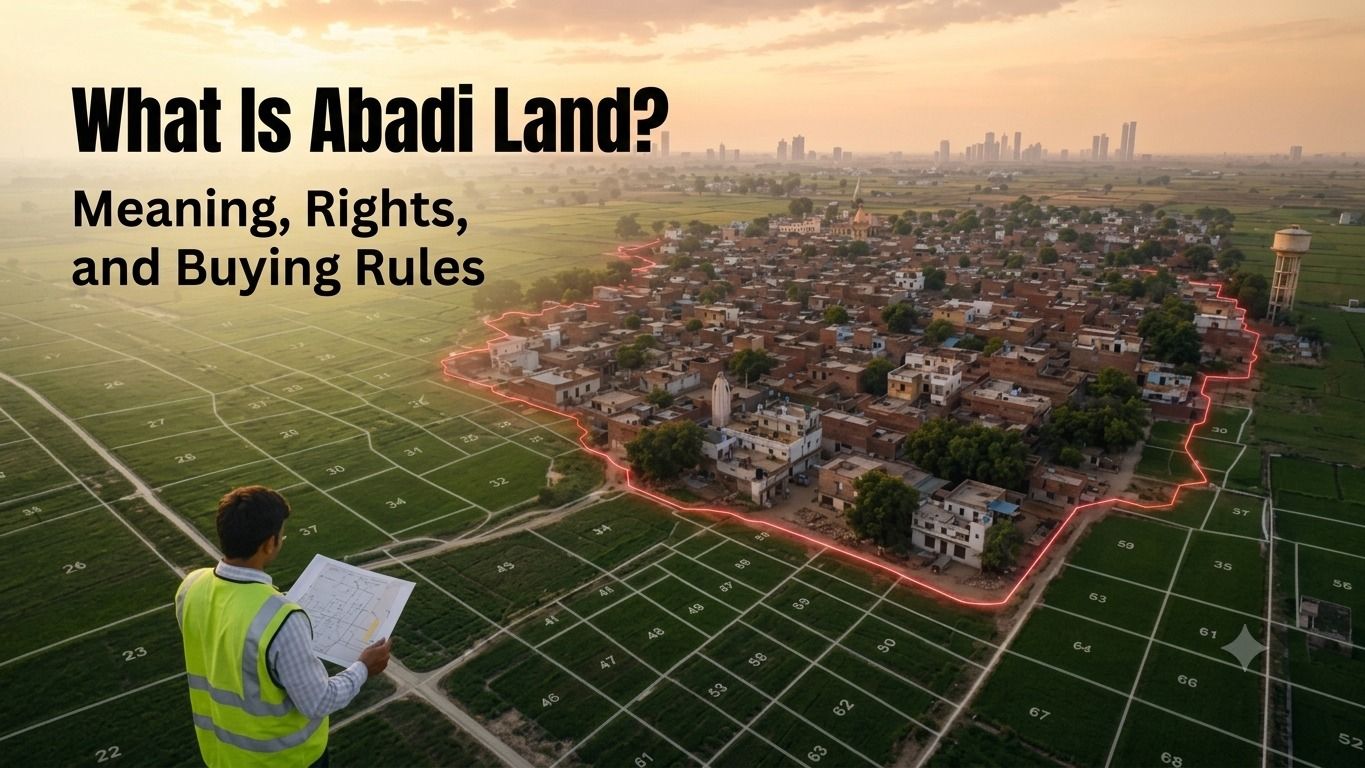
Simply put, Abadi land refers to the residential area of a village where people live, build houses, and carry out everyday community activities.
Unlike agricultural land, which is used for farming, Abadi land is generally meant for residential use.
You'll often find:
Village houses
Small shops
Community buildings
Courtyards
Internal village roads
Traditional family homes
Think of any old Indian village.
The fields are usually outside the main settlement.
The cluster of homes in the centre—that is commonly known as the village Abadi area.
Over time, many of these settlements have grown naturally rather than through planned urban development.
That's why documentation and layouts can differ from modern residential colonies.
Why Is It Called "Abadi" Land?
The word "Abadi" comes from a term that broadly refers to an inhabited or populated area.
Historically, villages had two broad categories of land:
Agricultural land used for cultivation.
Abadi land used for houses and community living.
Even today, revenue records in many states continue to distinguish between these two categories.
Understanding this distinction is important because the rules for buying, selling, and using the land can vary.
Why Buyers Should Understand Abadi Land Before Investing
Imagine finding a house in a peaceful village at a price that's much lower than a similar property in the city.
It sounds like a great opportunity.
But before getting excited, it's worth asking a few questions.
Is the land legally transferable?
Who actually owns it?
Has it been recorded in government records?
Can a bank provide a home loan against it?
These details matter because not every property inside a village follows the same legal process.
A little research now can save months of stress later.
How Is Abadi Land Different from Agricultural Land?
This is one of the biggest areas of confusion for buyers.
People often assume that all village land is agricultural.
That's not true.
Once you understand the difference, property discussions become much easier.
Feature | Abadi Land | ||
Primary Purpose | Residential use | Farming and cultivation | |
Construction | Houses and village buildings | Farming-related structures (subject to applicable laws) | |
Location | Within village habitation | Outside residential settlement | |
Typical Use | Living, shops, community spaces | Crops, orchards, agriculture | |
Governing Rules | Vary by state and local authority | Agricultural land laws |
In simple words, agricultural land grows crops.
Abadi land grows communities.
Can You Build a House on Abadi Land?
In many cases, yes.
That's actually one of its primary purposes.
However, the answer isn't always straightforward.
Whether construction is allowed depends on several factors, including:
State-specific land laws.
Local panchayat or municipal regulations.
Ownership records.
Whether the land falls within notified development areas.
Applicable building rules and permissions.
For this reason, it's always wise to verify the local regulations before starting any construction.
A Situation Many Buyers Experience
A family decided to purchase a small house in their ancestral village.
Everything seemed simple.
The seller had lived there for years, neighbours confirmed the family's ownership, and the property had been occupied for decades.
Still, before completing the purchase, they checked the available revenue records and asked a local legal professional to review the documents.
During the review, they discovered that one boundary shown in older records didn't fully match the current layout.
The issue was resolved before registration, avoiding a dispute that could have surfaced much later.
It's a good reminder that even when a property appears familiar, verifying the paperwork is just as important as inspecting the site.
Who Owns Abadi Land?
Ownership depends on the property's history and the applicable laws in that state.
For example, Abadi land may be:
Privately owned by an individual or family.
Inherited through generations.
Recorded in village revenue records.
Transferred through registered sale or succession, where legally permitted.
In some villages, ownership records are well maintained.
In others, older properties may rely on historical records, inheritance documents, or local revenue entries.
That's why buyers should never assume ownership simply because someone has been living on the property for a long time.
Occupation and legal ownership are not always the same.
What Rights Do Owners of Abadi Land Have?
Generally, a lawful owner of Abadi land may have rights such as:
Living on the property.
Selling the property, subject to applicable laws.
Transferring ownership through inheritance.
Renovating or rebuilding, where permitted.
Using the property for residential purposes.
However, these rights can vary depending on state regulations, local authority rules, and the legal status of the property.
If you're purchasing Abadi land, it's advisable to confirm the specific rules that apply in the area where the property is located.
Can You Buy Abadi Land in India?
Yes, in many cases you can.
However, the buying process isn't exactly the same everywhere.
Different states may have different procedures for:
Ownership records.
Registration.
Mutation.
Stamp duty.
Local approvals.
Some Abadi properties have complete registered documentation.
Others may involve older village records that require additional verification.
Before making any payment, ensure that the seller has the legal right to transfer ownership and that the available documents support the transaction.
Documents You Should Always Verify
One of the most common mistakes buyers make is relying only on verbal assurances.
Instead, ask for the relevant documents and verify them carefully.
Depending on the property and the state, these may include:
Sale Deed (if available).
Mutation records.
Revenue records.
Property tax receipts.
Identity proof of the seller.
Inheritance documents (where applicable).
Site map or property sketch, if available.
Encumbrance Certificate, where applicable.
If anything seems unclear, seek advice from a qualified property lawyer before finalising the purchase.
Can Banks Finance Abadi Land?
This is another question buyers frequently ask.
The answer depends on several factors.
Banks may consider:
Clear ownership records.
Marketable title.
Registration status.
Property location.
Applicable lending policies.
Some properties may qualify for financing, while others may not.
If you plan to purchase the property using a home loan, it's sensible to check with the lender before paying a booking amount or advance.
A Small Observation Worth Remembering
If you've ever walked through an old village, you've probably noticed something interesting.
Some homes have stood there for generations.
New houses have been built beside them.
Children play in narrow lanes.
Small grocery shops operate from the front rooms.
That's what makes Abadi land unique.
It isn't just a piece of land.
It's often part of a living community with its own history, traditions, and long-standing neighbourhood relationships.
Understanding that context can be just as valuable as understanding the paperwork.
Buying Rules for Abadi Land: What Every Buyer Should Know
One of the biggest misconceptions about Abadi land is that the buying process is the same everywhere in India.
It isn't.
Land is a state subject, which means the rules can vary from one state to another. Some states have digitised village records extensively, while others still rely on traditional revenue records and local documentation.
That doesn't mean buying Abadi land is unsafe.
It simply means you should understand the local process before making a commitment.
As a general rule, make sure you:
Confirm the seller is the legal owner.
Verify that the property can legally be transferred.
Check whether the transaction requires registration under the applicable state laws.
Ensure there are no disputes, government restrictions, or pending legal claims on the property.
If you're unsure about any step, consulting a qualified property lawyer or local revenue official is a sensible investment.
How to Verify Abadi Land Before Buying
Buying property should never be based only on trust.
Even if the seller is a relative or someone known in the village, document verification is still essential.
A simple checklist can help.
Step 1: Verify Ownership
Ask the seller for the available ownership documents and compare them with the revenue records maintained by the local authority.
The names should match.
If they don't, ask why before proceeding.
Step 2: Check Revenue Records
Many states now provide online access to land records, while others may require verification through the local revenue office.
Confirm details such as:
Owner's name
Property description
Area of land
Property boundaries, where available
Step 3: Verify the Property Boundaries
Documents are important.
So is the actual site.
Visit the property and make sure the physical boundaries match the available records.
A small difference today can become a major dispute later.
Step 4: Check for Legal Disputes
Ask whether the property is involved in:
Family inheritance disputes
Court cases
Loan-related claims
Government acquisition proceedings
Don't hesitate to request supporting documents if needed.
Step 5: Verify Registration and Mutation
If the property has changed hands before, check whether the ownership was properly registered and updated in the relevant records.
Incomplete mutation can create unnecessary complications in the future.
Common Risks Buyers Should Know
Every type of property carries some level of risk.
Abadi land is no exception.
However, most issues can be avoided through careful verification.
Unclear Ownership History
Older village properties sometimes pass through several generations without formal documentation.
This doesn't automatically make the property illegal, but it does mean ownership should be verified carefully.
Family Disputes
One family member may agree to sell while another later claims ownership rights.
If the property is inherited, confirm that all legal heirs have completed the necessary legal formalities before purchasing.
Boundary Issues
Village properties may have older boundary descriptions that don't perfectly match current structures.
That's why a physical inspection is just as important as reviewing the paperwork.
Incomplete Documentation
Some buyers assume that long-term possession is enough.
It isn't.
The stronger the documentation, the smoother future resale or financing is likely to be.
Can You Get a Home Loan for Abadi Land?
This is one of the most frequently asked questions.
The answer depends on the property itself.
Banks generally assess factors such as:
Clear ownership.
Marketable title.
Registration status.
Property location.
Lending policy.
Legal verification.
Some Abadi properties may qualify for financing, while others may not.
If you're planning to use a home loan, speak with the lender before signing any agreement or paying an advance.
Common Myths About Abadi Land
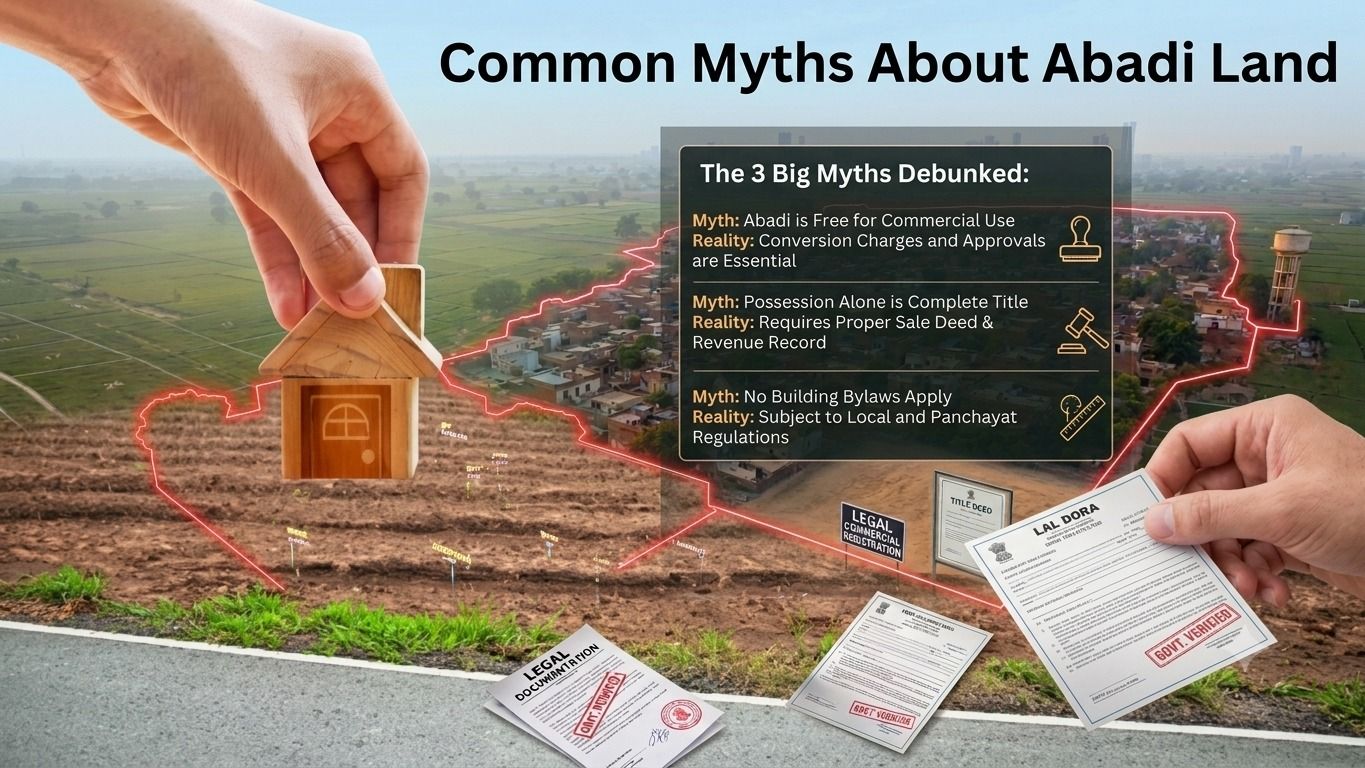
Let's clear up a few misunderstandings.
Myth 1: All Abadi Land Is Illegal
Not true.
Many residential properties across rural India are situated on legally recognised Abadi land.
The key is verifying ownership and applicable local regulations.
Myth 2: You Don't Need Documents
Incorrect.
Every property transaction should be supported by proper documentation, regardless of whether the property is in a city or a village.
Myth 3: Abadi Land Cannot Be Sold
In many situations, Abadi land can be bought and sold lawfully.
However, the procedure depends on state laws and the property's legal status.
Myth 4: Living on Land Automatically Makes You the Owner
Occupation alone doesn't necessarily establish legal ownership.
Ownership should always be supported by valid records and applicable legal documentation.
Who Should Consider Buying Abadi Land?
Abadi land can be a suitable option for:
Families looking to build a home in their native village.
Buyers seeking relatively affordable residential property in rural areas.
Individuals planning to renovate inherited village homes.
Investors interested in areas experiencing gradual infrastructure development.
However, buyers looking for quick resale opportunities or immediate financing should carefully evaluate the property's documentation and market conditions first.
A Small Story That Says a Lot
A young couple wanted to renovate their grandparents' old village house.
At first, they thought the biggest challenge would be construction.
It wasn't.
The real work involved gathering old records, confirming inheritance details, and updating ownership entries.
The paperwork took time.
But once everything was complete, they had peace of mind.
Years later, when they decided to extend the house, having the documents in order made every step much easier.
Sometimes, the value of good paperwork isn't obvious until you actually need it.
Things to Remember Before Signing Any Agreement
Before making the final payment, ask yourself these questions:
Have I verified the ownership?
Have I inspected the property personally?
Do the documents match the available records?
Have I confirmed there are no legal disputes?
Do I understand the local rules that apply?
Have I consulted a legal professional if anything seems unclear?
If the answer to any of these is "No," take a little more time before moving forward.
Buying property should never feel rushed.
Final Thoughts
Abadi land has been part of India's villages for generations.
For many families, it represents more than property. It represents history, memories, and a place to call home.
For buyers, it can also be an opportunity—provided the investment is backed by careful research and proper documentation.
Before making a decision, understand the property's legal status, verify ownership, inspect the site, and confirm the applicable local rules.
A little extra effort today can prevent significant legal and financial challenges tomorrow.
The best property investments aren't made in a hurry.
They're made with confidence, clarity, and complete information.
Author Bio
Our editorial team creates practical, research-backed guides on land ownership, property laws, real estate investment, and home buying across India. We simplify complex legal and property topics so readers can make informed decisions with greater confidence.
Founder's Note
Buying property is one of the most important financial decisions most people will ever make.
Our mission is to make reliable, easy-to-understand property information available to every buyer—whether you're purchasing your first village home, investing in land, or planning for the future. Every article is written with a focus on accuracy, clarity, and long-term value for our readers.
Thank you for trusting us as your property knowledge partner.